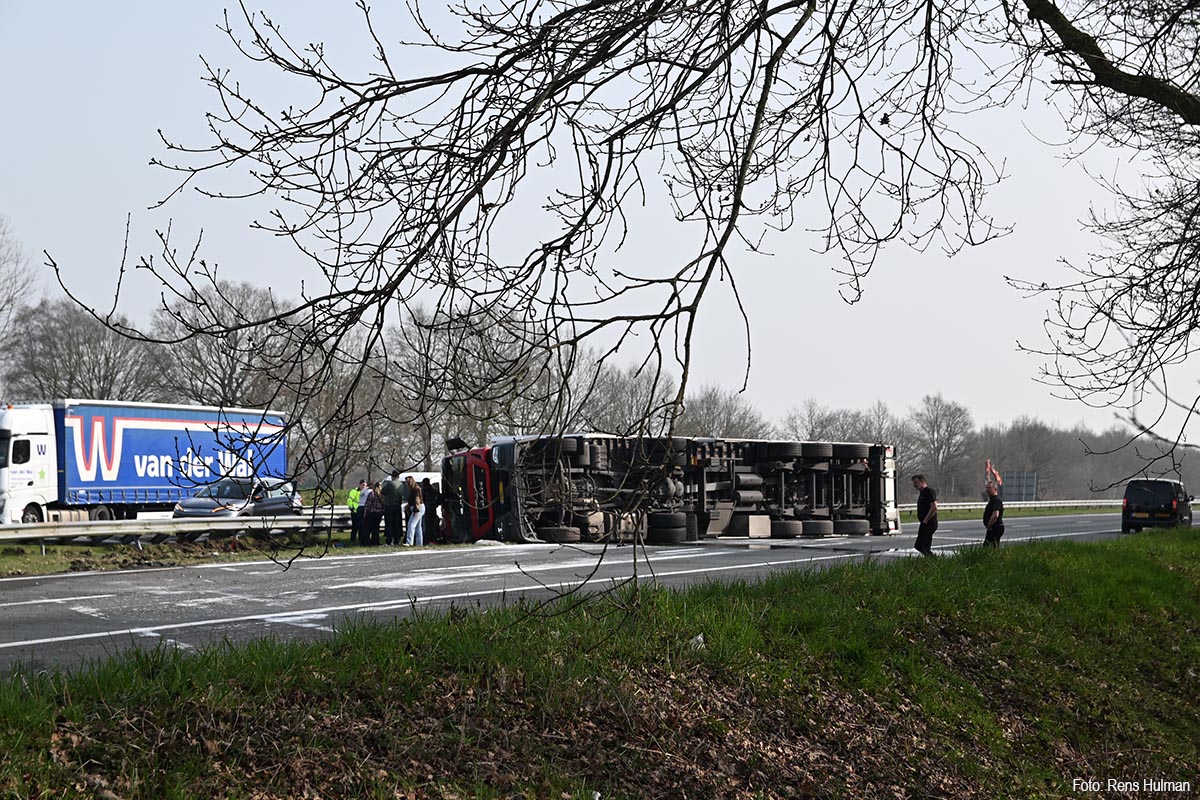
A32 Steenwijk-Meppel: Understanding Recovery Efforts After a Major Overturned Truck Incident
The A32 motorway, a vital artery connecting regions in the Netherlands, experienced significant disruption today following a serious incident involving an overturned truck. Near Havelterberg, on the stretch between Steenwijk and Meppel, a heavy goods vehicle veered off the road, resulting in prolonged closures and extensive recovery operations. This **Ongeval A32 Vandaag** (A32 Accident Today) has not only led to substantial traffic delays but also underscored the complex challenges involved in managing and clearing such incidents on major roadways. As recovery efforts continue, the focus remains on ensuring the safety of road users, swift clearance, and thorough repair of infrastructure damaged in the accident.
The incident, which occurred on the southbound carriageway towards Meppel, brought traffic to a standstill for many hours, forcing commuters to seek alternative routes and highlighting the resilience of emergency services and infrastructure management teams. While the immediate aftermath involved addressing potential injuries and securing the site, the subsequent phases have focused on the intricate process of vehicle recovery, environmental cleanup, and road surface restoration. Understanding the full scope of these efforts provides valuable insight into why such closures are necessary and how critical infrastructure is brought back online.
Details of the Incident: What Unfolded on the A32
The events leading to the A32 closure began when a truck, carrying two occupants – a man and a woman – veered off the road. Eyewitness accounts and initial reports indicate the vehicle first struck a traffic sign before coming to rest on its side against the central median barrier. This impact against the median barrier is crucial, as it likely absorbed significant force, potentially preventing the truck from crossing into the opposing lanes and exacerbating the situation. The precise cause of why the truck left the road remains under investigation, a common scenario in the immediate aftermath of such accidents. Factors such as driver fatigue, distraction, speed, vehicle malfunction, or even external conditions like slippery road surfaces can all contribute to such incidents.
Initially, reports suggested that both the driver and a co-driver had sustained injuries and were transported to a hospital via ambulance. However, subsequent updates clarified that while they were checked by medical personnel at the scene, they ultimately did not require hospitalisation. This common discrepancy in rapidly evolving situations highlights the dynamic nature of emergency response and information dissemination. The fact that the occupants, despite the severity of the incident, were not seriously injured is a testament to modern vehicle safety features and potentially the protective role of the median barrier. For a deeper look into the initial reports, you can refer to
What We Know About the A32 Truck Accident near Meppel.
The Immediate Aftermath and Road Closure: Securing the Scene
Following the **Ongeval A32 Vandaag**, the immediate priority for emergency services was to secure the site, assess the extent of any injuries, and ensure the safety of other road users. This involved:
* **Medical Response:** Ambulances and paramedics were dispatched to attend to the occupants of the truck.
* **Police Presence:** Law enforcement officers quickly arrived to manage traffic, cordon off the affected section of the A32, and begin preliminary investigations into the cause of the accident. Their role is critical in maintaining order and facilitating the work of other emergency teams.
* **Road Closure:** The stretch of the A32 from Steenwijk towards Meppel was completely shut down. This decision, though inconvenient for motorists, is vital for several reasons:
* **Safety:** To prevent secondary accidents and protect emergency workers.
* **Access:** To allow heavy recovery vehicles and cleanup crews unimpeded access to the site.
* **Investigation:** To preserve the scene for forensic examination.
* **Environmental Assessment:** A critical concern immediately after the truck overturned was the spillage of diesel fuel onto the road surface. Diesel, being a hazardous substance, not only presents a slip risk for vehicles but also an environmental hazard. The immediate assessment involved determining the extent of the spill and planning for its containment and cleanup. Additionally, the truck's cargo had also spilled onto the road, adding another layer of complexity to the cleanup operation. This requires specialised teams equipped to handle various types of materials.
The complete closure of such a busy motorway inevitably leads to significant traffic congestion on diversionary routes. Authorities like Rijkswaterstaat (the Dutch Directorate-General for Public Works and Water Management) play a crucial role in communicating these closures and advising motorists on alternative routes and expected delays.
The Complexities of Recovery and Repair
The recovery of an overturned heavy goods vehicle is a multi-stage, intricate process that requires significant coordination and specialized equipment. The **Ongeval A32 Vandaag** illustrates this perfectly, with operations continuing well into the late evening.
1. **Vehicle Recovery:** Rijkswaterstaat, in conjunction with commercial recovery services, orchestrated the uprighting and removal of the truck. This often involves:
* **Heavy Lifting Equipment:** Cranes and specialised tow trucks capable of lifting and moving large vehicles.
* **Stabilisation:** Before lifting, the truck must be stabilised to prevent further damage or movement.
* **Careful Manoeuvring:** The process is slow and meticulous to avoid further spillage of fuel or cargo and to prevent additional damage to the road infrastructure.
2. **Environmental Cleanup:** The presence of a diesel spill necessitated a comprehensive cleanup. This typically involves:
* **Containment:** Preventing the spill from spreading further, especially into drainage systems or natural environments.
* **Absorption:** Using absorbent materials to soak up the fuel.
* **Disposal:** The contaminated materials are then collected and disposed of according to environmental regulations.
* **Cargo Clearance:** Any spilled cargo also needs to be safely cleared from the road surface, which can vary greatly in difficulty depending on the nature of the goods.
3. **Infrastructure Repair:** The impact of the truck caused damage to the central median barrier. Repairs to these safety barriers are critical because they prevent vehicles from crossing into oncoming traffic, significantly reducing the risk of head-on collisions. This process can involve:
* **Assessment of Damage:** Determining the extent of the structural damage.
* **Replacement/Repair:** Removing damaged sections and installing new barrier components.
4. **Road Surface Restoration:** After the vehicle was removed, and the median barrier was repaired, the final stage involved cleaning the road surface. A ZOAB-cleaner was deployed. ZOAB (Zeer Open Asfaltbeton – Very Open Asphalt Concrete) is a porous asphalt commonly used in the Netherlands to reduce road noise and improve drainage. A specialized cleaner is required to effectively remove residual contaminants from its open texture without damaging the material. This ensures that the road surface is safe and offers optimal grip for motorists once reopened. For more details on significant road closures like this, read
A32 Havelterberg: Overturned Truck Causes Major Road Closure.
Impact on Commuters and Road Safety Lessons
The closure of a major route like the A32 for an extended period has a ripple effect across the regional road network. Commuters faced significant delays, with diversion routes becoming heavily congested. This not only impacts personal travel plans but can also have economic consequences for businesses reliant on timely transport.
From this **Ongeval A32 Vandaag**, several important lessons for road safety and incident management can be drawn:
* **Patience and Information:** When major incidents occur, drivers are advised to remain patient and check real-time traffic information from sources like ANWB or Rijkswaterstaat before setting off or during their journey.
* **Driver Awareness:** Accidents involving large vehicles often highlight the critical need for constant vigilance on the road. Avoiding distractions, managing fatigue, and adhering to speed limits are paramount, especially for professional drivers handling heavy loads.
* **Importance of Infrastructure:** The median barrier played a crucial role in containing the incident. Ongoing investment in robust road infrastructure, including safety barriers, can mitigate the severity of accidents.
* **Preparedness of Emergency Services:** The efficient coordination between police, ambulance, fire services, Rijkswaterstaat, and recovery specialists is vital for minimising disruption and ensuring a swift and safe resolution to complex incidents.
* **Environmental Responsibility:** The diesel spill underscores the environmental considerations in vehicle accidents. Rapid response and specialised cleanup are essential to mitigate ecological impact.
Conclusion
The overturned truck incident on the A32 near Havelterberg served as a stark reminder of the unpredictable nature of road travel and the extensive efforts required to manage its consequences. While the disruption to traffic was considerable, the coordinated and professional response by various agencies ensured that the scene was secured, injuries attended to, and the complex recovery and repair operations were conducted efficiently. The careful cleanup of the diesel spill and the restoration of the median barrier and road surface demonstrate a commitment to both environmental protection and road safety. As the A32 fully reopens, motorists can resume their journeys with confidence, knowing that every effort has been made to restore the integrity and safety of this vital transport link.